


| Country | Austria, Hungary |
|---|---|
| Ruler | Ferdinand I (1835-48) |
| Face Value | 20 Kreuzer |
| Year of issue | 1848 |
| Metal | Silver |
| Fineness | 583 |
| Catalogue # | KM# 432; Herinek 287; Huszar 2092; Unger 1428 |
| Weight | 6,59 g |
| Diameter | 26,61 mm |
| Our code | G963 |
| Die Axis | ↑↑ |
| Additional info | Prooflike |
Ferdinand I (1835-48), Ferdinand I (1835-48)
Authenticity Guaranteed
Actual Coin Pictured
Ships within 1 business day
Worldwide Shipping
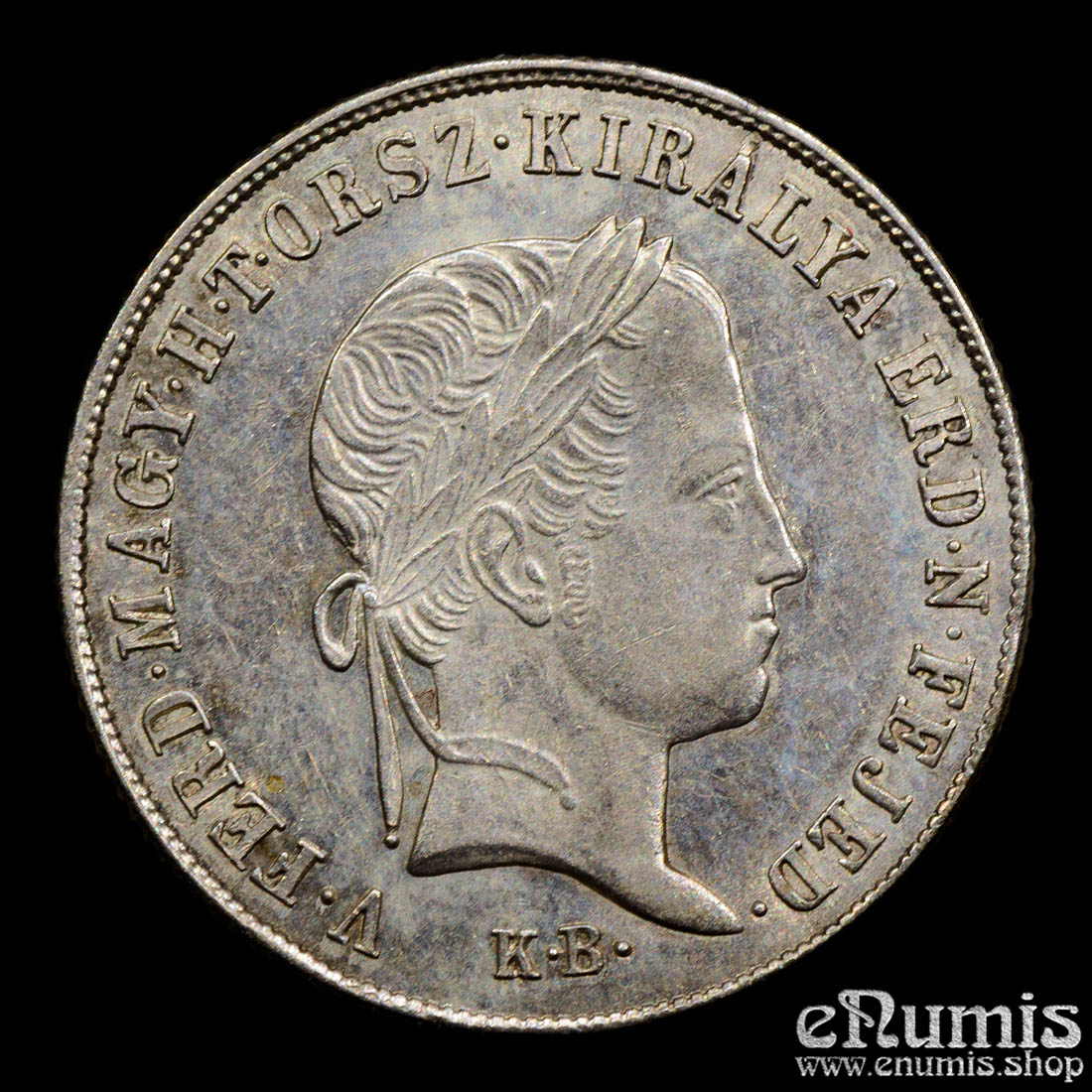
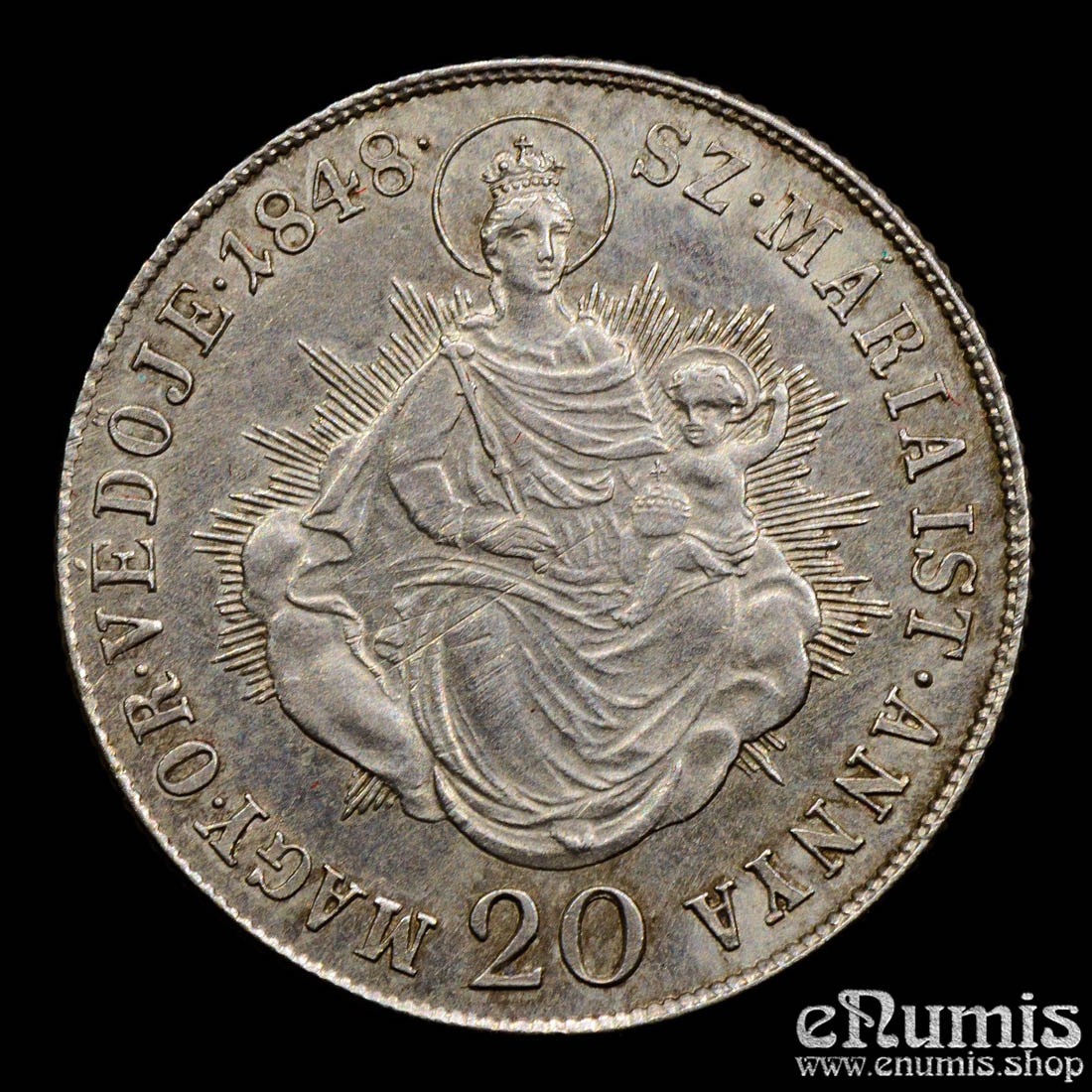
Austria, Hungary, Ferdinand I, 20 Kreuzer 1848 KB, Kremnitz, Prooflike, aUNC
Availability:
Out of stock
Authenticity Guaranteed
Actual Coin Pictured
Ships within 1 business day
Worldwide Shipping
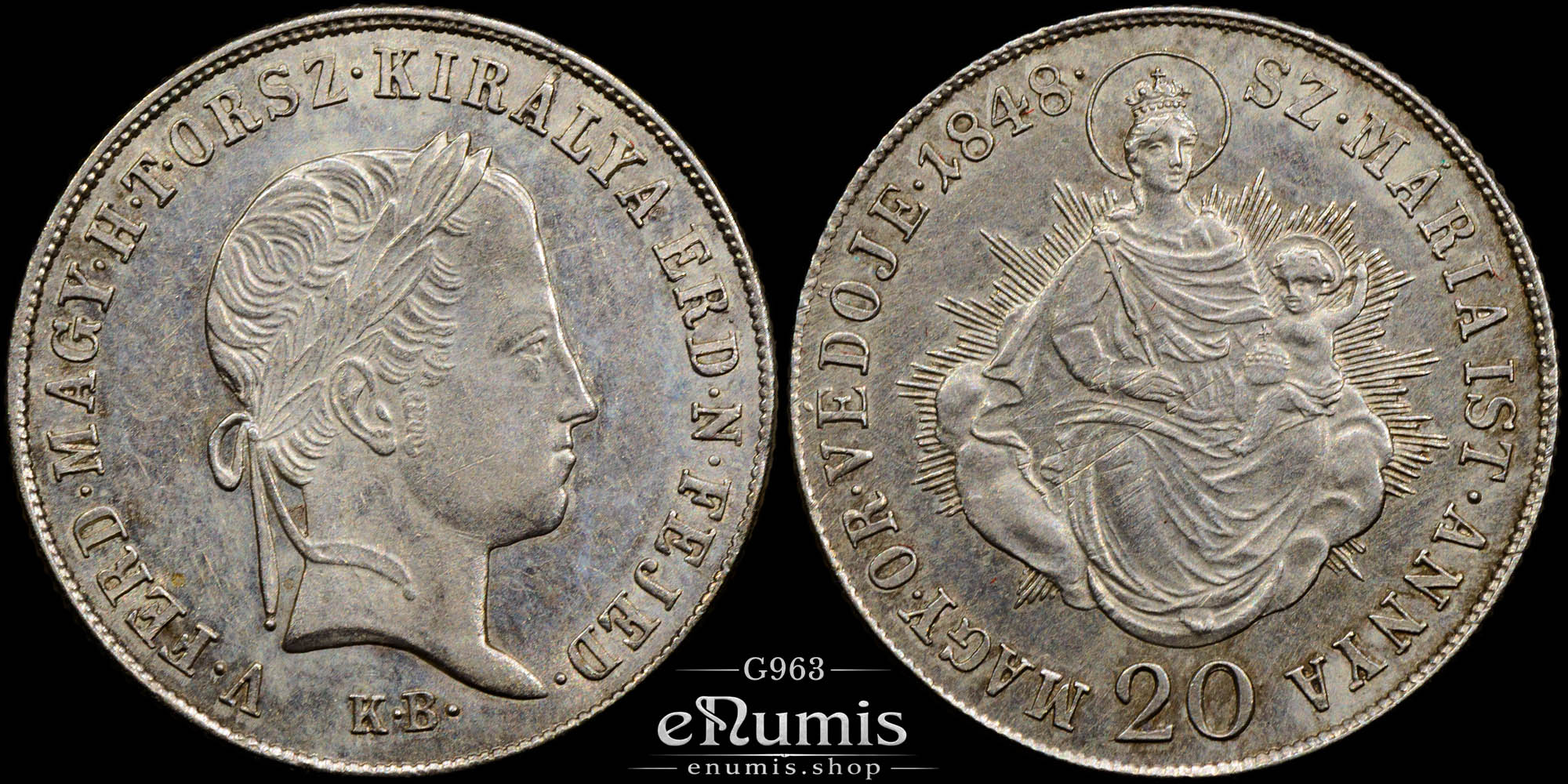
Obverse: Head of Ferdinand I facing right, legend around.
Legend (Hungarian): V· FERD· MAGY· H· T· ORSZ· KIRÁLYA ERD· N· FEJED·; K·B·
Translation: Ferdinand V, King of Hungarian, Croatian and other countries, Grand Duke of Transylvania.

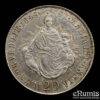
Reverse: The Virgin Mary and the baby Jesus at center surrounded by rays of light, legend, denomination, and date.
Legend (Hungarian): SZ· MÁRIA IST· ANNYA MAGY· OR· VÉDŐJE· 1848·; 20
Translation: Saint Maria Mother of God, Protector of Hungary.
Edge: Reeded
The pictures provided are of the actual coin for sale.Guaranteed genuine.
Out of stock
SHIPPING:
• We ship worldwide from Slovenia, a member of the European Union, within 1 business day after payment is received.
• Every order is carefully packed to ensure safe delivery.
• Standard registered shipping via The Post of Slovenia is available worldwide and includes a tracking number.
• DHL Express shipping is also available at checkout for customers who require faster delivery.
• Registered shipping via The Post of Slovenia: €7 within Europe and €8 for the rest of the world.
• FREE registered shipping via The Post of Slovenia for orders over €300.
• FREE DHL Express shipping, including full insurance, for orders over €800.
INSURANCE:
• Upon your request an order over 300 Euro can be sent with extra insurance.
• The price of the insurance is about 1% of the order total (minimum price of the insurance is €5).
OTHER:
• Import duties, taxes and charges are not included in the item’s price or shipping charges. Buyers are responsible for these charges.
• Please check with your country’s customs office to determine what these additional costs will be prior to buying.
22 August 2025 (updated 21 July 2026):
Important Notice for USA Customers
Please note that, due to the new U.S. customs tariffs, the Post of Slovenia has temporarily suspended shipments to the United States. Unfortunately, this means we are unable to send orders to the USA at this time.
We will resume shipping to the USA as soon as the service becomes available again. Thank you for your understanding and patience.
However, we can still ship to the USA via DHL Express. Please be aware that additional U.S. customs duties or fees may apply, which are the responsibility of the buyer.
The coins remain with the seller until the goods have been paid for in full.
We accept the following payment methods:
- All major debit and credit cards (services provided by Stripe Inc. and Bankart d.o.o.)
- Cash in Euros, US Dollars or British Pounds;
- Bank Transfer – to our corporate bank account (eNumis d.o.o., OTP banka d.d. Bank account: SI56 04 0000 2762 09090 BIC: KBMASI2X );
- We also accept PayPal (only for regular customers).
At eNumis.shop, your satisfaction is our top priority. If, for any reason, you are not completely satisfied with your purchase, please contact us immediately.
You may return any item within 30 days of receipt, provided it is in the same condition as when sent. All returns must be shipped using Registered Post or your country’s equivalent postal service with a tracking number.
Upon receiving and inspecting your return, we will offer you an exchange or a refund of the coin’s purchase price, as agreed.
Please note:
Return shipping costs are the responsibility of the buyer and are non-refundable.
Items must be securely packaged to avoid damage during return shipping.
Returns sent without prior notification may not be accepted.
To initiate a return, please contact us at info@enumis.shop or through our Contact Form.
Thank you for shopping with eNumis.shop, where your trust and confidence matter.
History
This coin was struck in the opening weeks of a revolution.
In March 1848, the news from Paris arrived in Budapest like a spark in dry grass. On the fifteenth of March, a young poet named Sándor Petőfi stood on the steps of the National Museum and read his National Song to a crowd that grew by the hour – Talpra magyar, hí a haza! – Arise, Hungarian, the homeland calls! By nightfall, a list of twelve demands had been drawn up and presented to the Habsburg governor. Within days, under the pressure of simultaneous revolution in Vienna itself, Emperor Ferdinand had conceded most of them: a Hungarian parliament, a responsible ministry, the abolition of serfdom, freedom of the press. Lajos Kossuth, the journalist and orator who had spent years in Habsburg prisons for his liberal agitation, emerged as the driving force of the new Hungarian government. It was, for a few extraordinary months, a revolution that had actually succeeded.
The mint at Kremnitz – deep in the mountain silver country of Upper Hungary, one of the oldest and most productive mints in the Habsburg world – continued striking coins through all of this upheaval, and the 20 Kreuzer of 1848 carries on its obverse the portrait of Ferdinand I, Emperor of Austria and King of Hungary, the man who had just signed away more royal prerogatives in a single spring than any Habsburg had conceded in two centuries. Ferdinand was kind, gentle, and severely epileptic – so incapacitated by his condition that real power had long been exercised by Metternich and the court cabal around him. He had signed the revolutionary concessions not from conviction but because there was no one in Vienna steady enough to refuse. When Metternich himself fled the city disguised in a laundry cart, the old order effectively dissolved around its nominal head.
On the reverse, the coin carries a remarkable image – one that sets this particular 20 Kreuzer apart from the standard imperial issue struck the same year at the same mint. Rather than the double-headed Habsburg eagle of the standard type, the Hungarian revolutionary issue placed the Virgin Mary with the Christ Child at the centre, surrounded by rays of divine light, with the legend SZ. MÁRIA IST. ANNYA MAGY. OR. VÉDŐJE – Holy Mary, Mother of God, Protector of Hungary. It was a deliberate assertion of Hungarian identity, of the ancient bond between the Kingdom of Hungary and its heavenly patroness, Regnum Marianum – the Kingdom of Mary – that Hungarian kings had invoked since Stephen I accepted his crown from the Pope in the year 1000. In a year when Hungary was defining itself against Vienna, the reverse of its coinage was a theological and political statement simultaneously.
The revolution did not survive the year. By autumn, the Croatian general Jelačić had invaded from the south with Austrian backing. In December, Ferdinand was quietly persuaded to abdicate in favor of his eighteen-year-old nephew Franz Joseph, who immediately repudiated all the concessions his uncle had made, on the grounds that he had never personally agreed to them. Russian troops crossed into Hungary in June 1849 at the invitation of Vienna, and by August the revolution was crushed. Thirteen Hungarian generals were executed at Arad. Kossuth fled into exile, eventually dying in Turin in 1894, still waiting for the Hungary he had briefly held in his hands.
This coin was struck at the precise moment that Hungary believed it had won. The portrait on the obverse belongs to the emperor who said yes. The image on the reverse belongs to the nation that took him at his word.
Coin condition (grade) is described using the following scale, based on internationally recognised numismatic grading standards. Where a grade is separated by a slash (e.g. VF/XF), the obverse and reverse differ in condition – VF obverse, XF reverse in this example.
| Grade | Full name | Description |
|---|---|---|
| F | Fine | Noticeable, moderate to considerable wear across the design; major details, lettering and date remain clearly legible |
| F+ | Choice Fine | Slightly better than Fine |
| F‑VF | Fine to Very Fine | Between Fine and Very Fine |
| aVF | About Very Fine | Slightly below Very Fine |
| VF | Very Fine | Moderate wear on the higher points; major design elements and lettering remain sharp and well-defined |
| VF+ | Choice Very Fine | Slightly better than Very Fine |
| VF‑XF | Very Fine to Extremely Fine | Between Very Fine and Extremely Fine |
| aXF | About Extremely Fine | Slightly below Extremely Fine |
| XF | Extremely Fine | Light wear confined to the highest points of the design; most original detail and some mint lustre remain |
| XF+ | Choice Extremely Fine | Slightly better than Extremely Fine |
| XF‑UNC | Extremely Fine to Uncirculated | Between Extremely Fine and Uncirculated |
| aUNC | About Uncirculated | Slightly below Uncirculated |
| UNC | Uncirculated | Shows no evidence of circulation wear; retains its original mint lustre, which may appear naturally subdued with age |
| Proof | Proof | Struck specifically for collectors from specially prepared, polished dies on polished planchets, giving sharp detail and mirror-like fields. Refers to how the coin was made, not to its state of preservation |
| Prooflike (PL) | Prooflike | A coin from the ordinary circulation production that happens to show mirror-like fields, usually from early strikes with fresh dies – it looks similar to a Proof but was not specially struck for collectors |
Grading is inherently somewhat subjective. If you would like additional photos or have any question about a coin’s condition before ordering, please contact us – we’re happy to help.