



| Country | Cyprus |
|---|---|
| Ruler | Victoria (1837-1901) |
| Face Value | 18 Piastres |
| Year of issue | 1901 |
| Metal | Silver |
| Fineness | 925 |
| Catalogue # | KM# 7 |
| Weight | 11,02 g |
| Diameter | 29,75 mm |
| Our code | A681 |
| Die Axis | ↑↑ |
| Additional info | - |
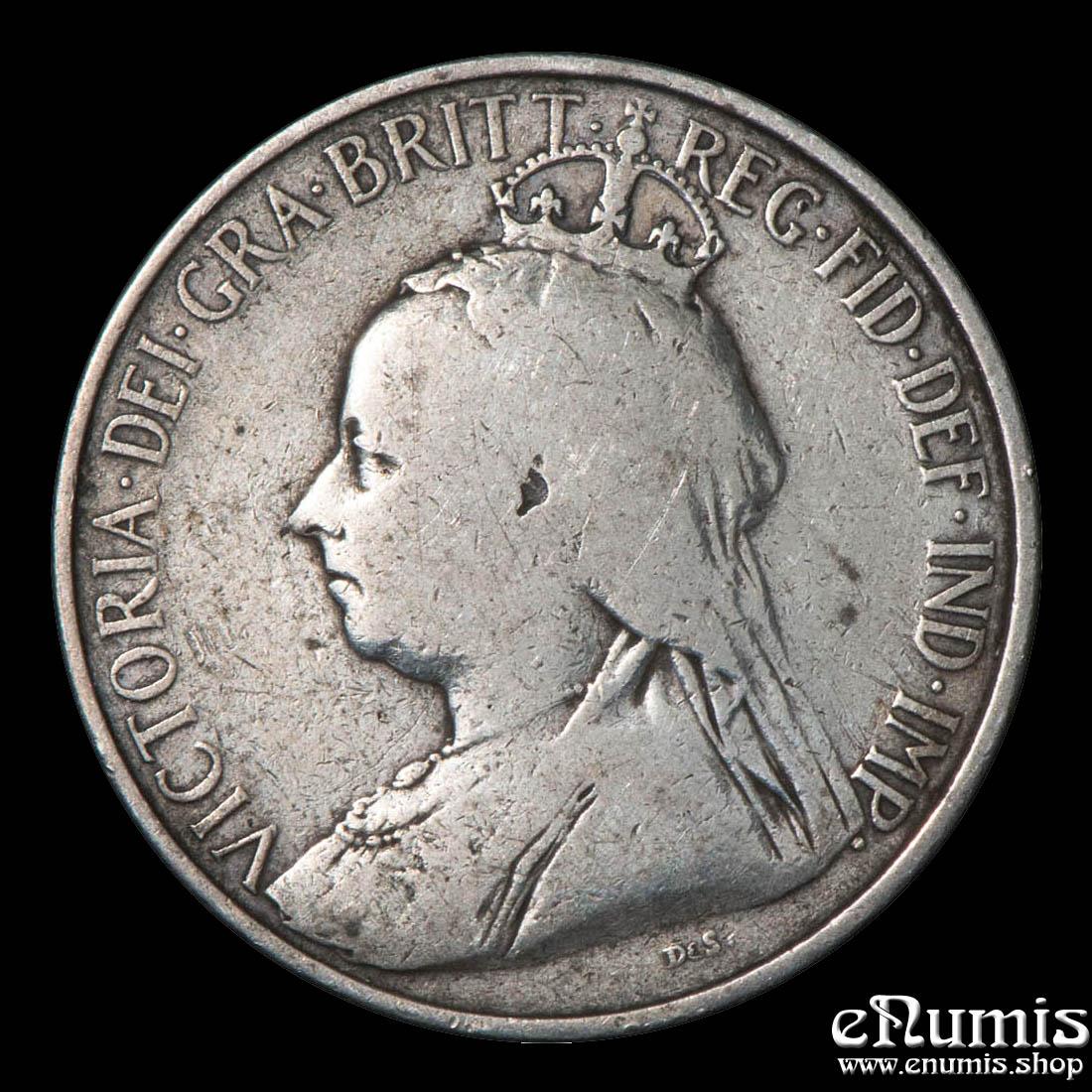
Cyprus, Victoria, 18 Piastres 1901, VF
Crowned and veiled bust of Queen Victoria to left, legend around.
Legend:
VICTORIA• DEI• GRA• BRITT• REG• FID• DEF• IND• IMP•; DeS.
Translation:
Victoria, by the grace of God, Queen of the Britains, Defender of the Faith, Empress of India.
Engraver:
♦
A crowned shield of arms which divides the dates. The crown rests on a scroll inscribed CYPRUS and the value is set out in words (EIGHTEEN PIASTRES) around the lower
♦
Edge:
Milled
Cyprus
Authenticity Guaranteed
Actual Coin Pictured
Ships within 1 business day
Worldwide Shipping
Cyprus, Victoria, 18 Piastres 1901, VF
Availability:
In stock
Authenticity Guaranteed
Actual Coin Pictured
Ships within 1 business day
Worldwide Shipping
Obverse: Crowned and veiled bust of Queen Victoria to left, legend around.
Legend (Latin): VICTORIA• DEI• GRA• BRITT• REG• FID• DEF• IND• IMP•; DeS.
Translation: Victoria, by the grace of God, Queen of the Britains, Defender of the Faith, Empress of India.
Engraver: George William de Saulles

Reverse: A crowned shield of arms which divides the dates. The crown rests on a scroll inscribed CYPRUS and the value is set out in words (EIGHTEEN PIASTRES) around the lower edge of the design.
Legend (English): CYPRUS; 19 01; EIGHTEEN PIASTRES
Engraver: George Kruger Gray
Edge: Milled
The pictures provided are of the actual coin for sale.Guaranteed genuine.
55 € Shipping from 7 € — FREE over 300 €*
*Except US, shipped via DHL Express — see Postage tab
In stock
KM# 7
Shipping from 7 € · FREE over 300 €*
*US orders: DHL Express only - see Postage
Ships within 1 business day
Authenticity Guaranteed
Actual Coin Pictured
30-Day Returns
Worldwide Shipping
Secure payment




SHIPPING:
• We ship worldwide from Slovenia, a member of the European Union, within 1 business day after payment is received.
• Every order is carefully packed to ensure safe delivery.
• Standard registered shipping via The Post of Slovenia is available worldwide and includes a tracking number.
• DHL Express shipping is also available at checkout for customers who require faster delivery.
• Registered shipping via The Post of Slovenia: €7 within Europe and €8 for the rest of the world.
• FREE registered shipping via The Post of Slovenia for orders over €300.
• FREE DHL Express shipping, including full insurance, for orders over €800.
INSURANCE:
• Upon your request an order over 300 Euro can be sent with extra insurance.
• The price of the insurance is about 1% of the order total (minimum price of the insurance is €5).
OTHER:
• Import duties, taxes and charges are not included in the item’s price or shipping charges. Buyers are responsible for these charges.
• Please check with your country’s customs office to determine what these additional costs will be prior to buying.
22 August 2025 (updated 21 July 2026):
Important Notice for USA Customers
Please note that, due to the new U.S. customs tariffs, the Post of Slovenia has temporarily suspended shipments to the United States. Unfortunately, this means we are unable to send orders to the USA at this time.
We will resume shipping to the USA as soon as the service becomes available again. Thank you for your understanding and patience.
However, we can still ship to the USA via DHL Express. Please be aware that additional U.S. customs duties or fees may apply, which are the responsibility of the buyer.
The coins remain with the seller until the goods have been paid for in full.
We accept the following payment methods:
- All major debit and credit cards (services provided by Stripe Inc. and Bankart d.o.o.)
- Cash in Euros, US Dollars or British Pounds;
- Bank Transfer – to our corporate bank account (eNumis d.o.o., OTP banka d.d. Bank account: SI56 04 0000 2762 09090 BIC: KBMASI2X );
- We also accept PayPal (only for regular customers).
At eNumis.shop, your satisfaction is our top priority. If, for any reason, you are not completely satisfied with your purchase, please contact us immediately.
You may return any item within 30 days of receipt, provided it is in the same condition as when sent. All returns must be shipped using Registered Post or your country’s equivalent postal service with a tracking number.
Upon receiving and inspecting your return, we will offer you an exchange or a refund of the coin’s purchase price, as agreed.
Please note:
Return shipping costs are the responsibility of the buyer and are non-refundable.
Items must be securely packaged to avoid damage during return shipping.
Returns sent without prior notification may not be accepted.
To initiate a return, please contact us at info@enumis.shop or through our Contact Form.
Thank you for shopping with eNumis.shop, where your trust and confidence matter.
History
In June 1878, with the Russo-Turkish War barely concluded and the Congress of Berlin reshaping the map of Europe, Britain and the Ottoman Empire quietly signed the Cyprus Convention. In exchange for British military support should Russia attempt further advances into Ottoman territory, the Sultan agreed to hand over the administration of Cyprus. The island changed hands not through war or revolution but through diplomatic calculation – a small square on the great chessboard of Victorian geopolitics, valued primarily for its position on the sea route to India and its proximity to the Suez Canal, which Britain had purchased a controlling interest in just three years earlier. When the first British High Commissioner, Lieutenant-General Garnet Wolseley, landed at Larnaca in July 1878, the bishop of the local Orthodox church greeted him with the hope that Britain would eventually unite the island with Greece. Wolseley received the sentiment politely and changed the subject.
For twenty-three years, Cyprus had no silver coinage of its own. British imperial silver circulated on the island alongside whatever Ottoman pieces remained in use, with the shilling valued at nine piastres – the piastre being the local monetary unit inherited from centuries of Ottoman rule. The arrangement was functional but awkward, and it meant that Cyprus contributed nothing to its own monetary infrastructure. Then, in 1900, the decision was finally made to strike dedicated Cypriot coinage at the Royal Mint in London – and the 18 Piastres was the largest and most significant denomination of the new issue.
The obverse bears the Old Head portrait of Victoria – the veiled, crowned, and thoroughly imperious likeness engraved by Thomas Brock that had replaced the earlier Jubilee Head in 1893, and which would serve until the queen’s death. The legend reads VICTORIA DEI GRA BRITT REG FID DEF IND IMP – Victoria, by the Grace of God, Queen of the Britains, Defender of the Faith, Empress of India. It was the fullest statement of her titles, compressed into a coin destined for an island she had never visited, inhabited by people who had never asked to be governed by her.
The reverse carried a crowned shield bearing the Lusignan lion – the heraldic beast of the medieval French dynasty that had ruled Cyprus from the twelfth century until 1489, when Venice absorbed the kingdom and the long Lusignan story ended. The choice was not accidental. By placing the Lusignan lion on the coinage, the designers were reaching past three centuries of Ottoman rule to invoke a Christian medieval order – a quiet statement, perhaps, about the kind of history Britain preferred to acknowledge on an island it was still, technically, only administering on behalf of the Sultan.
The coin was struck in 1901, the last year of Victoria’s reign. She died in January of that year, at Osborne House on the Isle of Wight, having reigned for sixty-three years. The 18 Piastres of 1901 was therefore the only denomination of its kind ever to carry her portrait – issued in the final months of the longest reign in British history, on an island at the eastern edge of the Mediterranean, where the Ottoman Empire still nominally held sovereignty and a Greek bishop still hoped for union with Athens.
It is a coin of borrowed time, struck at the end of one era and the very beginning of another.
Coin condition (grade) is described using the following scale, based on internationally recognised numismatic grading standards. Where a grade is separated by a slash (e.g. VF/XF), the obverse and reverse differ in condition – VF obverse, XF reverse in this example.
| Grade | Full name | Description |
|---|---|---|
| F | Fine | Noticeable, moderate to considerable wear across the design; major details, lettering and date remain clearly legible |
| F+ | Choice Fine | Slightly better than Fine |
| F‑VF | Fine to Very Fine | Between Fine and Very Fine |
| aVF | About Very Fine | Slightly below Very Fine |
| VF | Very Fine | Moderate wear on the higher points; major design elements and lettering remain sharp and well-defined |
| VF+ | Choice Very Fine | Slightly better than Very Fine |
| VF‑XF | Very Fine to Extremely Fine | Between Very Fine and Extremely Fine |
| aXF | About Extremely Fine | Slightly below Extremely Fine |
| XF | Extremely Fine | Light wear confined to the highest points of the design; most original detail and some mint lustre remain |
| XF+ | Choice Extremely Fine | Slightly better than Extremely Fine |
| XF‑UNC | Extremely Fine to Uncirculated | Between Extremely Fine and Uncirculated |
| aUNC | About Uncirculated | Slightly below Uncirculated |
| UNC | Uncirculated | Shows no evidence of circulation wear; retains its original mint lustre, which may appear naturally subdued with age |
| Proof | Proof | Struck specifically for collectors from specially prepared, polished dies on polished planchets, giving sharp detail and mirror-like fields. Refers to how the coin was made, not to its state of preservation |
| Prooflike (PL) | Prooflike | A coin from the ordinary circulation production that happens to show mirror-like fields, usually from early strikes with fresh dies – it looks similar to a Proof but was not specially struck for collectors |
Grading is inherently somewhat subjective. If you would like additional photos or have any question about a coin’s condition before ordering, please contact us – we’re happy to help.