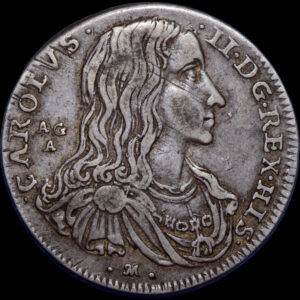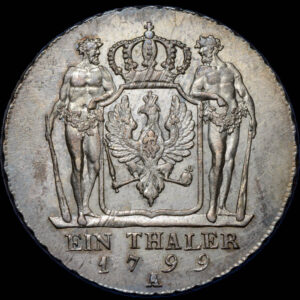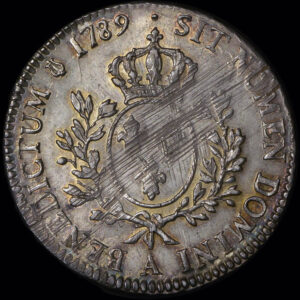


Before a coin ever left the mint, it had to weigh correctly. In the era of hand-struck coinage – before the introduction of mechanized minting in the seventeenth and eighteenth centuries – achieving a precise weight was a matter of manual skill rather than mechanical consistency. A blank of metal, freshly cut or cast, might come out slightly too heavy. The solution was simple and direct: a mint worker would file the surface of the blank until the correct weight was reached.
The traces left by this filing are what numismatists call adjustment marks – fine, parallel striations visible on the surface of the coin, most often on the high points of the design or across the fields. They were made before striking, which means the die impression was subsequently applied over them, and they are therefore part of the original manufacturing process rather than post-mint damage.
Adjustment marks are most commonly encountered on early American coinage, on Spanish colonial pieces, and on European hammered and early milled coins of the sixteenth through eighteenth centuries. They are a natural consequence of hand production and carry no stigma of misuse or mistreatment. A collector or grader examining a coin with adjustment marks is looking at evidence of the mint’s quality control process, not of careless handling by a later owner.
That said, adjustment marks do affect a coin’s appearance and, consequently, its grade and value. Heavy filing across the portrait or central design can significantly reduce a coin’s eye appeal and depress its price relative to an example without such marks. Lighter marks confined to the fields or periphery are generally considered less detrimental. Most grading services will note the presence of adjustment marks on a certified coin’s label.
The key distinction for the collector is between adjustment marks – which are original and mint-made – and post-mint scratches or cleaning, which are not. Under magnification, adjustment marks typically show a consistent directionality and depth consistent with filing, and the die work will be visible over them, confirming their pre-strike origin.
Examples:
|
|
|
|
| Italy, Naples & Sicily, Carlo II, Tari 1688 | Germany, Prussia, Friedrich Wilhelm III, Taler 1799 | France, Louis XVI, Ecu 1789 |